

Reactive Dog Training Tips for Calm Walks in Saskatoon and area

Barking, lunging, and “freak-outs” on leash aren’t stubbornness—they’re typically done because the dog does not understand how to deal with stressful situations while on leash. Behavior experts recommend reward-based methods over aversives for all behavior problems, including reactivity, because they’re more humane and effective long-term. Dogs are den animals, and a leash that often chokes them, it makes no sense because it prevents the dog from exploring and sniffing.
Understanding Reactivity vs. Aggression
What reactivity looks like (and how it differs from aggression)
Why leashes and tight spaces can amplify big feelings
Common triggers we see around Saskatoon
The science in plain English
Reactivity is an over-the-top response to a trigger—often barking, lunging, or growling—especially when a dog feels trapped or conflicted. It’s not the same as intent to harm. Medical and behaviour sources define leash reactivity as fear/frustration behaviours that can escalate when a dog is restrained or confined
Leashes, narrow sidewalks, and head-on encounters remove a dog’s escape options, which is why reactions spike on urban walks compared with off-leash settings. Methods that give dogs controlled choice—like BAT (Behavior Adjustment Training)—reduce arousal by granting safe space and movement.
Around Saskatoon, common triggers include sudden dog-dog greetings on multi-use paths, bikes on the Meewasin Trail, and crowded entry points at off-leash areas like Chief Whitecap Park. City guidance asks owners to leash up and remove any dog becoming a nuisance at off-leash parks—important context for reactive dogs
Quick trigger audit
List your dog’s top 3 triggers, distance where your dog first notices them, and the earliest body-language changes (ear set, mouth clamp, weight shift). This becomes your training map.
Your 3-Phase Plan: Manage → Teach → Practice
Phase 1: Management that prevents rehearsals
Phase 2: Foundation skills (engagement, decompression, leash mechanics)
Phase 3: Controlled setups that build wins
Sample weekly schedule for Saskatoon routes
Phase 1—Management: Choose low-traffic routes and times (quiet residential streets, backalleys, the outer loops of neighbourhood parks; avoid peak-time trailheads). Use a wide collar, 2 m leash, and high-value foods. Do not feed your dog before going on a walk. Use his food for training.
Phase 2—Teach: Start indoors or in your yard. Build nose-to-hand targeting, name-response, and “Find It” scatter feeding to interrupt scanning. Practice leash skills—soft hands, letting a little leash slide, the leash should have a letter ‘J” loop at the bottom. Avoid the tight straight leash. Dogs learn to fight the leash when it is kept tight.
Phase 3—Practice: Work at your dog’s distance where they can notice a trigger and can still think. Before your dog begins to react, say, “Ok, let’s Go! (upbeat and happy) and turn the opposite direction to avoid confrontation. As you turn away, make sure your leash is soft and you are talking to your dog. “Good. Good”, etc” Reward your dog at your side as you walk away from the distraction. Gradually shorten the distance over weeks, not days.The Goal is controlled choice: your dog earns relief by choosing calmer behaviours.
Sample Saskatoon and area week
Mon–Wed: Quiet sidewalks at dusk; Fri: car-park watch from a distance at Dog Park entrance; Sun: wide-open field reps near Chief Whitecap Park or Warman (stay outside the busiest access points; re-leash promptly if arousal climbs).
Leash Skills That Change the Picture (Handler How-To)
Keep a gentle “smile” (soft J-shape) in the leash so your dog feels supported, not trapped. As a trigger appears, step into an arc away from it, let a little leash slide, then feed behind your knee to encourage following. This aligns with soft leash mechanics designed to reduce frustration.
Introduce short, repeatable patterns—“1-2-3 Treat,” hand-target, “Find It”—before the environment gets spicy. These predictable mini-routines help dogs settle and choose sniffing over staring, matching how counter-conditioning and autonomy reduce reactivity.
If your dog is stiff, vocal, or ignoring food, you’re too close. Use your pre-planned exit—u-turn, car buffer, or visual screen. That “leave before they lose it” habit prevents rehearsals and accelerates progress
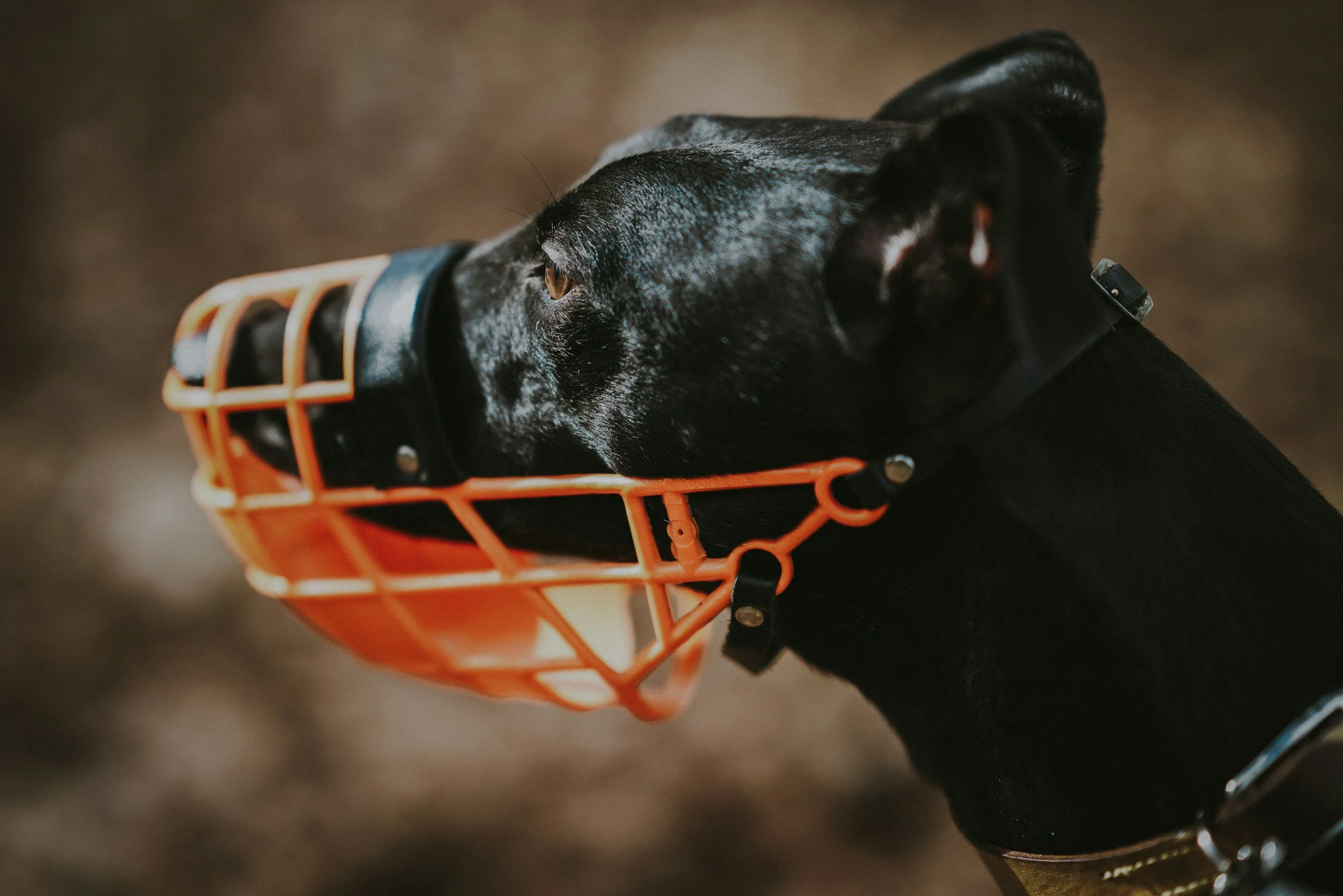
Fit check: panting room and treat access
2-stage conditioning (nose in → strap on)
Micro-sessions: 1–2 minutes, then break
Safety notes for winter in SK
Choose a basket muzzle that allows full panting and treat delivery. Start where your dog is relaxed. Stage 1: feed through the muzzle; praise and remove. Stage 2: when your dog is eager to place their nose in, briefly clip the strap, feed, and unclip. Keep sessions tiny and upbeat.
Shelter and veterinary guides show that positive reinforcement is key; muzzles are management, not punishment. Expect days to weeks, not hours, for comfort to build—especially for sensitive dogs or in cold, dry Saskatoon winters (watch for snow buildup; apply a nose balm if needed)
Fit checklist
Full panting? Tongue clearance? No rubbing on the bridge of the nose? Treats pass easily? If “no” to any, adjust size or brand.
Where to Practice Around Saskatoon (and Where Not To)
Low-distraction starter spots
“Window-shopping” at park entrances
High-pressure zones to avoid (for now)
Off-leash etiquette with a reactive dog
Start with wide residential streets and quiet school fields outside bell times. As skills grow, practice “watch and withdraw” near—but not in—busy park entries so your dog can see dogs at a safe distance and earn reinforcement for calm choices. When arousal spikes, add distance quickly.
Avoid tight river trail pinch-points at rush hour and crowded off-leash cores until you’ve banked weeks of success. City guidance is clear: if your dog becomes a nuisance at an off-leash area, leash up and leave—your training success will thank you.
When to Call a Pro (and What It Costs Locally)
Signs you need 1:1 help
What a behaviour-first plan includes
Saskatoon examples: private vs. group options
How we work at Warman Dog Training
If there’s a bite history, escalating reactions, or your dog can’t take food outside, bring in a pro. A thorough plan assesses triggers, teaches decompression skills, and coaches your leash handling—often alongside vet input for pain or anxiety.
Local options vary: some facilities run 6-week reactivity classes, while others offer private behaviour modification. For example, Crazy Tails lists a 6-week Reactive Dog Class (posted pricing on their page), while individual trainers in Saskatoon advertise private sessions focused on reactivity.
At Warman Dog Training, we use positive, reward-based methods and tailor sessions for Saskatoon routes you actually walk—quiet-hour schedules, visual screens, and step-by-step homework that fits your life.
Reactive walks in Saskatoon get calmer when we manage space, teach choice, and practice at the right distance. If you’d like a custom plan—and hands-on coaching in your neighbourhood—book a session with Warman Dog Training. Let’s turn “uh-oh” moments into confident, connection-building walks.
-
Many dogs become reliably calm with the right plan, but stress and health changes can bring back old patterns. Focus on management plus reward-based training, which leading veterinary groups endorse for behaviour change.
-
Not necessarily. Reactivity is a big emotional response that can look scary; aggression involves intent to harm. Clear, choice-based work (e.g., BAT) helps dogs select calmer options before emotions overflow.
-
A standard, non-retractable leash up to 2 m meets local rules; pair it with a Y-front harness. Keep a soft “smile” in the leash and practice arcs to reduce pressure.
-
If there’s a risk of biting, yes—after positive conditioning. Basket muzzles allow panting and treat delivery and are recommended by veterinary and shelter resources when introduced with rewards.
-
Start in low-distraction areas (quiet streets, large fields), then work toward busier places. At off-leash parks, re-leash and leave if your dog becomes a nuisance, per city guidance.
